
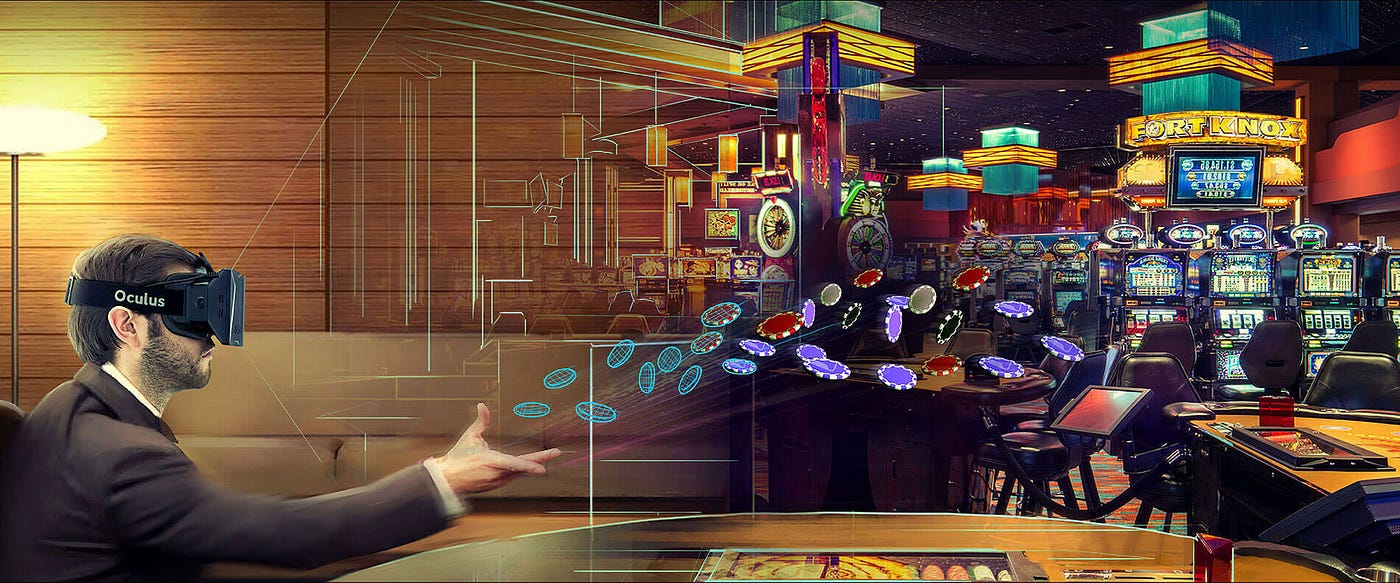

In recent years, the rise of virtual reality (VR) has opened new horizons in various industries, fundamentally altering how people interact with digital environments. Among the sectors that have been significantly impacted by VR technology is the online casino industry.
As one of the most dynamic and competitive markets, online casinos constantly seek ways to enhance user experience. VR has emerged as a game-changing tool to help achieve that goal.
In this article, we will explore the impact of virtual reality on online casino experiences, its current applications, its benefits to operators and players, and the potential future of this technology in the gambling world.
The Emergence of Virtual Reality in Online Casinos
Online casinos have traditionally relied on advanced graphics, engaging game mechanics, and live dealer integrations to attract and retain players. However, despite these advancements, the gap between the physical experience of brick-and-mortar casinos and online gambling has always existed.
Virtual reality is the technology that promises to bridge this gap by replicating the immersive atmosphere of land-based casinos and offering players a more interactive, lifelike experience from the comfort of their homes. VR is an advanced form of augmented gaming that creates a computer-generated environment where users can interact with 3D objects and other players.
In online casinos, this means stepping into a simulated casino environment, complete with slot machines, poker tables, and even different players and dealers you can interact with as if you were physically present.
While VR casinos are still in the early stages of development, some pioneering companies have already launched virtual reality casino platforms.
How Virtual Reality Enhances the Online Casino Experience
Integrating virtual reality in online casinos offers several critical enhancements to the traditional online gambling experience. These improvements address the main limitations of conventional online casinos, making VR a powerful tool for the industry’s growth.
Below are the most significant ways VR enhances the online casino experience:
Immersive and Realistic Environment
One of the main draws of physical casinos is the ambiance—the sounds of the slot machines, the lively conversations at the poker tables, and the clinking of chips on the roulette wheel. VR allows online casinos to recreate these aspects, providing players with a rich, immersive atmosphere.
Players can enter a simulated casino space that feels lifelike through a VR headset. They can walk around the casino floor, interact with other players and dealers, and even customize their virtual avatars.
This level of immersion adds depth to the gaming experience, making it more engaging and exciting compared to traditional online platforms that typically present a two-dimensional, non-interactive environment.
By bridging the sensory gap, VR casinos offer an experience that feels closer to the real thing while maintaining online access’s convenience.
Social Interaction
One of the critical aspects of traditional casino gaming is the social experience—whether it’s chatting with fellow players, engaging with dealers, or even just observing the casino’s hustle and bustle.
While offering multiplayer games and live dealer options, online casinos often fail to replicate the human element fully. Virtual reality changes this by providing real-time, lifelike social interactions within the virtual casino environment.
In VR casinos, players can communicate using voice or text chat, watch each other play, and observe body language through avatars. These avatars can mimic real-life movements using motion capture or controllers, making interactions more dynamic.
The sense of presence in a VR casino can also encourage players to form communities, organize tournaments, or socialize during games in a way that is reminiscent of land-based casinos.
Customization and Personalization
In virtual reality, the player’s experience is not limited to what the casino offers on the platform. VR casinos allow for a greater degree of customization and personalization. Players can often choose the design of their avatars, select their seating preferences at tables, and explore different areas of the casino that suit their gaming interests. As VR technology continues to advance, the possibilities for personalization will only expand further.
This customization aspect can lead to a more tailored gambling experience, where players feel a sense of ownership over their virtual environment. For example, a player might customize their avatar to reflect their style or preferences, making the experience more engaging on an individual level.
Enhanced Game Interaction
Virtual reality transforms the way players interact with casino games themselves. Traditional online casinos use point-and-click mechanics, where a player makes choices via a mouse or touchscreen.
In contrast, VR casinos use motion controls and hand-tracking systems, making the interaction more intuitive and engaging. Players can physically pick up chips, roll dice, or spin a roulette wheel, creating a more tactile and authentic gambling experience.
The enhanced interaction also means players have more control over their gaming environment, making it easier to immerse themselves in the game and make decisions based on physical movements. This kind of interactivity is a crucial factor in differentiating VR casinos from standard online platforms.
Unique Game Designs
The 3D capabilities of virtual reality open the door for innovative game designs that are not possible in traditional online or physical casinos. Game developers can create entirely new gaming environments that take advantage of the VR platform’s ability to render complex 3D spaces. Imagine slot machines operating in outer space or blackjack tables in a fantasy landscape—these are all possible with VR.
This flexibility allows casinos to introduce more creative, visually stunning, and immersive game options, making their offerings stand out in the competitive online market. Over time, as more developers experiment with VR casino games, we can expect to see an array of unique and original content that appeals to a broad range of players.
Challenges and Limitations of Virtual Reality on Online Casino Experiences
Despite the many advantages of VR in online gambling, there are still several challenges that need to be addressed before it becomes mainstream.
Hardware and Accessibility
One of the main hurdles in the adoption of VR is the need for specialized hardware. To fully enjoy a VR casino, players need access to VR headsets, which can be costly. While the prices of VR hardware have decreased over time, it still represents a significant investment for many potential players. Additionally, VR systems require a powerful computer or console to run effectively, further adding to the cost barrier.
Moreover, comfort and ease of use are also issues. Some players may find VR headsets uncomfortable for extended periods, and others may struggle with motion sickness or disorientation when using the technology.
Limited Game Selection
While a few VR casinos exist, the selection of VR-enabled casino games still needs to be improved compared to traditional online platforms. The development of VR games requires more time, effort, and resources than standard 2D games, which means that the library of available VR casino games grows more slowly. Until this issue is addressed, some players may find the lack of variety in VR casinos a deterrent.
Internet Connectivity
High-quality virtual reality experiences rely on fast, stable internet connections, particularly for multiplayer games or live dealer experiences. In regions with limited internet speeds or high latency, players may experience lag, which can detract from the overall immersive experience. As online casinos are dependent on global players, this becomes a significant concern, especially in markets with underdeveloped internet infrastructure.
The Future of Virtual Reality in Online Casinos
Despite the challenges, the potential of VR in online casinos is immense. As VR technology continues to evolve, we can expect more online casinos to adopt this technology, expanding the range of games and features available to players. In the future, advancements in VR hardware, such as more affordable headsets and improved comfort, will likely make the technology more accessible to a broader audience.
Furthermore, as game developers become more experienced with VR platforms, we can anticipate a wider variety of immersive and interactive games that push the boundaries of traditional casino offerings. The integration of artificial intelligence (AI) and machine learning into VR could also enhance personalization, enabling casinos to adapt the virtual environment to suit the preferences of individual players more accurately.
A New Era of Immersive Online Gambling
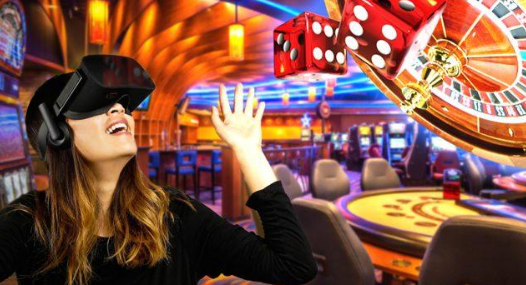
Virtual reality is poised to have a transformative impact on the online casino industry. VR technology can bridge the gap between online and land-based casinos by offering a more immersive, interactive, and social gambling experience.
While there are still challenges to overcome, the future of VR in online casinos looks promising, with the potential to revolutionize the way people gamble online. For players and operators alike, the advent of VR represents an exciting new chapter in the evolution of the gambling industry.