
Quick Facts
- Official Name (Cambodia local long form): Kingdom of Cambodia
- Conventional Short Form: Cambodia
- Capital City: Phnom Penh
- Land Area: Approximately 69,900 square miles
- Population: Over 17 million people (estimated Cambodian population)
- Currency: Cambodian Riel (KHR)
- Principal Language: Khmer language
- Government: Constitutional monarchy under the Cambodian Government
- Coastlines: Along the Gulf of Thailand, southwestern Cambodia
- Major Rivers: Mekong River, Tonle Sap River
- Highest Geographic Point: Phnom Aural
- National Flag: Cambodia’s flag (featuring a building—Angkor Wat)
Overview of the Kingdom of Cambodia
Cambodia is a nation located in Southeast Asia, shaped deeply by ancient civilization, French colonial influence, war, and rapid modernization. The Kingdom of Cambodia occupies a strategic position along the Indochinese mainland, bordered by Thailand, Laos, and Vietnam, with major river systems connecting it to long-standing Asian trade routes.
Its proximity to South Vietnam also shaped regional dynamics during the mid-20th century, particularly in periods of conflict and political transition.
Cambodia gained independence from France in 1953 and later experienced major upheaval during the Khmer Rouge regime, which led to significant loss of life and destruction of social institutions. The fall of Democratic Kampuchea and the Vietnamese invasion marked the end of the communist Khmer Rouge forces and the rebuilding of the modern Cambodian state.
Today, Cambodia is governed by the ruling Cambodian People’s Party, with leadership historically tied to Prime Minister Hun Sen. As of recent years, Hun Manet—his son—has also taken on major national leadership roles.
The Cambodian economy continues to grow through the tourism industry, garments, agriculture, and foreign aid. Despite its turbulent past, Cambodia remains known for the grandeur of its temples, the resilience of its people, and the enduring legacy of the ancient Khmer Empire.
Cambodia Geography – Southeast Asia
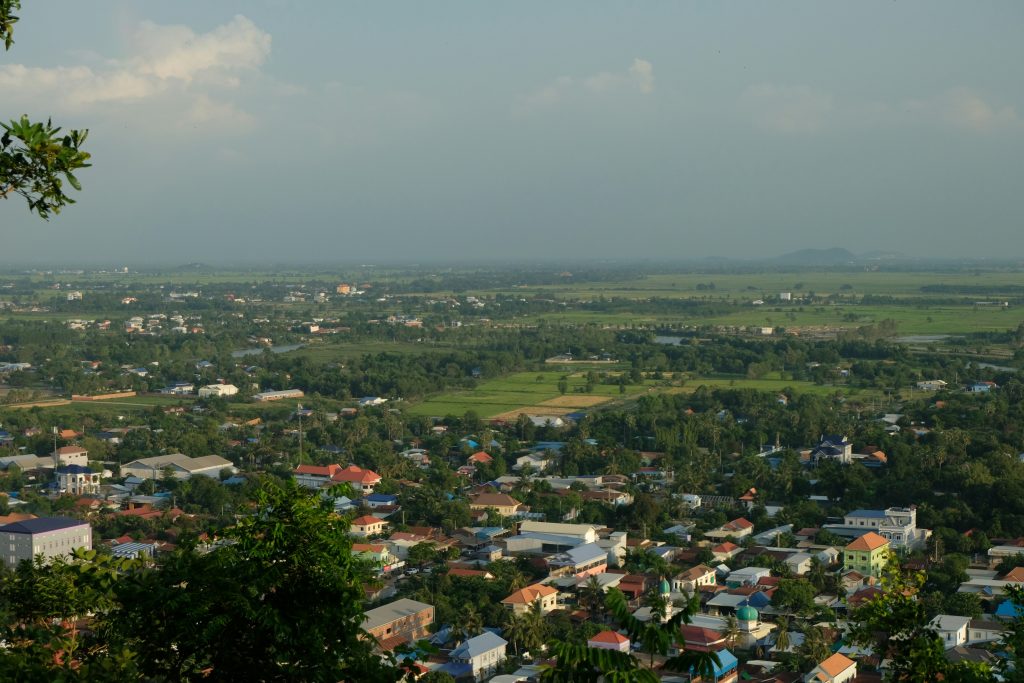
Cambodia consists of river plains, fertile basins, and plateaus connected by the Mekong River, one of the most important waterways in the region. Its position within the geography southeastern Asia region influences its climate, river systems, and strategic role along historic trade routes.
The country’s terrain includes:
- Lowland plains in the central region
- Forested highlands along the Thai border
- A tropical monsoon climate
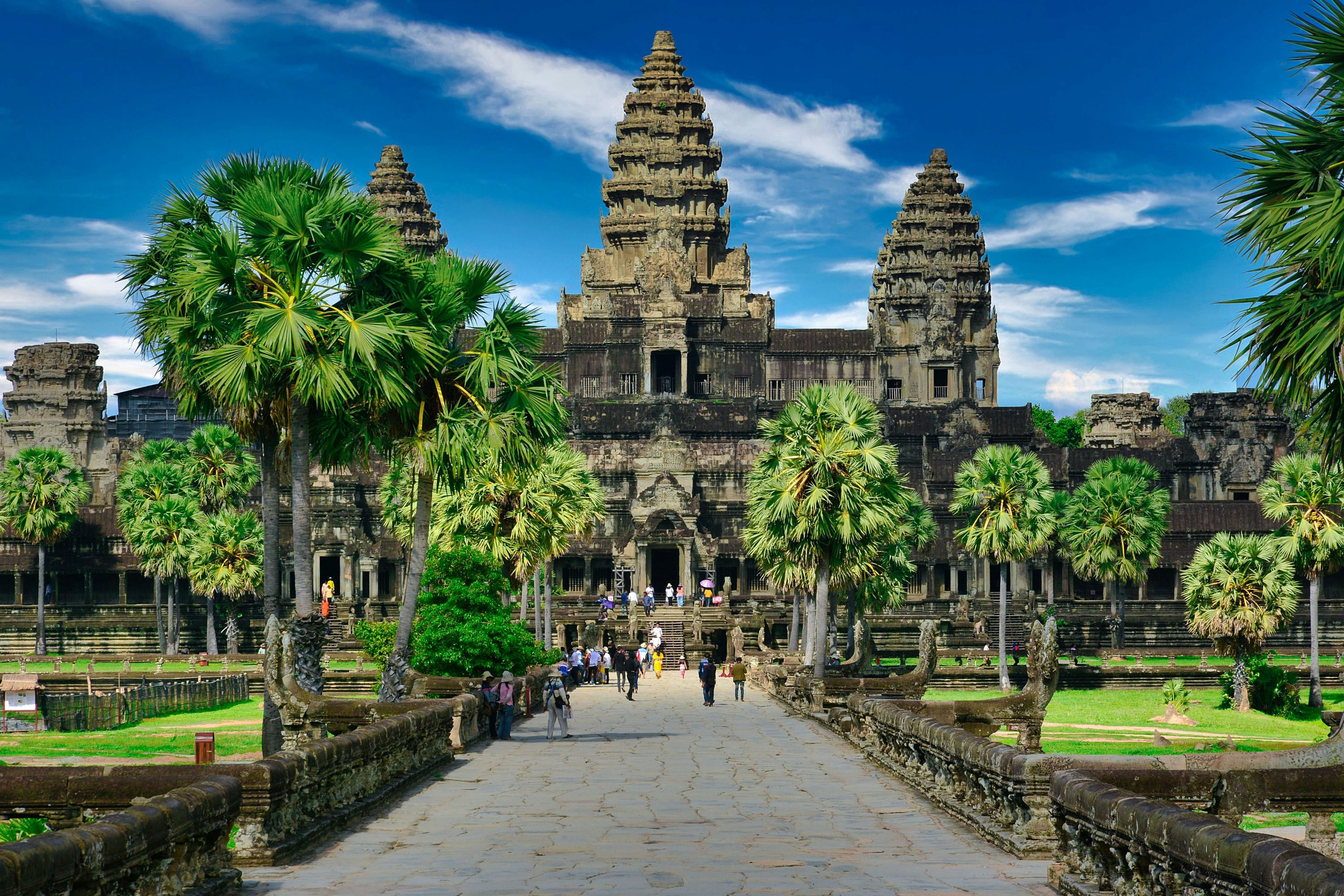
Much of Cambodia’s landscape is influenced by the remnants of the Khmer Empire, with ancient sites located near Siem Reap, the gateway to Angkor Wat, a UNESCO World Heritage Site.
The country’s Phnom Penh geographic coordinates place it at a central crossroads of Southeast Asia, making it historically important for trade, migration, and warfare.
Environmental challenges include flooding, deforestation, and the legacy of landmines in rural provinces.
History of Cambodia: From Khmer Republic Civilization to the Khmer Rouge Regime
The history of Cambodia spans thousands of years, beginning with the rise of the Khmer civilization and the Angkor Empire, whose architectural achievements remain visible today.
Cambodia’s early history is defined by the rise of the ancient Khmer Empire, which dominated much of Southeast Asia for centuries and established Angkor Wat as a major religious and cultural center. This period laid the foundation for Khmer civilization and the architectural achievements that still define Cambodia today.
During World War II, Cambodia also experienced the Japanese occupation, which briefly disrupted French control and contributed to rising nationalist sentiment. Cambodia became a French protectorate in the 19th century before gaining independence in 1953, restoring national control and beginning a new phase of state development.
The country’s darkest chapter unfolded during the Khmer Rouge era, beginning in 1975 when Pol Pot and the Khmer Rouge established Democratic Kampuchea. Under Pol Pot’s leadership, the regime pursued radical policies guided by extreme interpretations of communist legal theory. They sought to recreate society through forced labor, mass relocation, and the dismantling of social institutions.
Nearly two million Cambodians died, religious practice was banned, and government structures collapsed entirely. The Khmer Rouge surrendered in the 1990s, and several surviving Khmer Rouge leaders were later tried in international courts for their role in the atrocities.
Modern Cambodia
After the Vietnamese invasion in 1979, Cambodia gradually rebuilt through a coalition government supported by the UN and international partners. The national assembly and provincial and municipal courts were established, and the constitutional monarchy was restored.
Cambodia remains politically centralized, with key leadership roles under Prime Minister Hun Sen, later succeeded in major duties by Hun Manet.
Hun Sen’s long tenure shaped much of Cambodia’s post-war political stability and institutional development, influencing government structure and public policy. Despite the transition of duties to Hun Manet, Hun Sen remains an influential figure in Cambodian politics and continues to shape national decision-making.
People, Ethnic Groups, and Culture
The Cambodian people are predominantly Cambodian Khmer, with additional ethnic groups including Vietnamese, Cham, and Chinese communities. Khmer is the official language, while English and French are increasingly used.
Cultural expression in Cambodia is shaped by a blend of religious, artistic, and culinary traditions. Theravada Buddhism remains the foundation of daily life, influencing values, rituals, and community practices across the country.
Traditional Cambodian cuisine plays an important cultural role as well, with regional dishes and cooking methods passed down through generations. Cambodia is also known for its classical dance and music, including distinctive Cambodian folk tune forms that continue to define national identity.
Even traditional Cambodian colors, often used in ceremonial and religious contexts, reflect the country’s deep cultural heritage and long-standing artistic symbolism. This cultural palette is often referenced in historical documents and artistic descriptions, including the traditional Cambodian colors note which highlight their symbolic meaning in rituals and daily life.
Khmer identity remains deeply tied to the legacy of the Khmer Empire, its temples, and its long-standing cultural traditions.
Government, Political Structure, and Institutions
Cambodia is governed under a constitutional monarchy, supported by a framework of political institutions that guide national decision-making.
The Cambodian government, the National Assembly, the constitutional council, and the supreme court judges all play central roles in shaping national policy and administering the state. Various national committee groups also support policy coordination, planning, and sector-specific oversight across Cambodia’s administrative framework.
These roles include how constitutional council judges appointed through various branches help interpret constitutional matters and oversee legal compliance. Discussions around how Supreme Court judges appointed to these key roles contribute to Cambodia’s judicial oversight are often part of broader conversations about governance and legal reform.
From time to time, national discussions also focus on the selection of constitutional council judge candidates, especially during periods of institutional reform or political transition.
Cambodia’s political landscape is strongly influenced by the Cambodian People’s Party, which has maintained governance for several decades. Much of this continuity is associated with the longstanding leadership of Hun Sen, who played a central role in consolidating political power throughout his administration.
National security and defense are overseen by the Royal Cambodian Armed Forces, including the Royal Cambodian Army, the Royal Cambodian Air Force, and the Royal Khmer Navy. Together, these military and civilian agencies provide stability and protect Cambodian territory across the country.
Discussions around citizenship policy occasionally emerge in national debates, including questions about whether the Cambodia dual citizenship recognized should be adjusted in future legal reforms.
Cambodian Economy and Industry
In recent decades, Cambodia’s economy has expanded steadily as the country rebuilds from past conflicts and develops its major industries. The Cambodian economy relies heavily on key sectors such as garments and textiles, agriculture—particularly rice production—tourism, construction, and foreign aid.
Although Cambodia has made significant progress over the past decades, the country still faces economic challenges linked to income disparity, limited infrastructure, and the long-term effects of the Khmer Rouge era. Even so, the nation’s tourism industry remains one of the strongest in Southeast Asia.
According to a recent tourism statistics report, millions of visitors travel to Cambodia each year, with Siem Reap and the world-famous Angkor Wat standing out as the country’s most visited destinations.
In addition to these major sectors, Cambodia also maintains a regulated gaming industry that includes both offline casinos and a growing presence of online gaming platforms.
Land-based casinos—primarily located in border towns like Poipet and coastal areas such as Sihanoukville—attract a significant number of foreign visitors. Meanwhile, online casino activity has increased in recent years, contributing to local employment and investment despite periodic regulatory adjustments.
Cambodian Flag and Cambodia Etymology
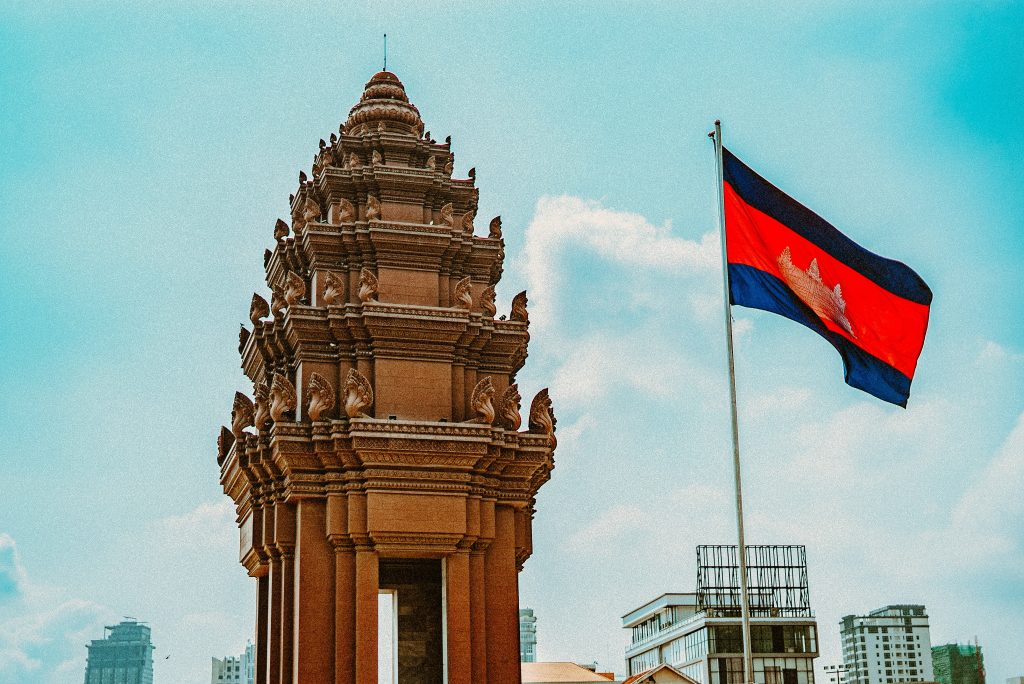
The Cambodian flag is unique as the only national flag (besides San Marino) that features a building—Angkor Wat. Its design reflects Cambodia’s heritage and religious influence.
The name “Cambodia” derives from “Kampuchea,” which traces back to ancient Sanskrit terms relating to the Khmer Republic and Empire, and broader Khmer identity.
Weather in Cambodia: Cambodia’s Climate
Cambodia has a tropical monsoon climate marked by two distinct seasons that shape travel and daily life across the country. The dry season runs from November to April, bringing sunny skies, lower humidity, and cooler mornings—ideal for exploring cities like Phnom Penh or visiting temples in Siem Reap.
From May to October, the wet season arrives with warm temperatures, higher humidity, and regular afternoon showers. These rains keep the landscape lush, especially around Tonlé Sap Lake and rural provinces.
Across the year, temperatures generally range from 25°C to 35°C, with the hottest months falling between March and May. Despite the seasonal shifts, Cambodia’s weather remains warm year-round, making it accessible for visitors in any month.
Notable Landmarks in Cambodia
Angkor Wat – World Heritage Site
As Cambodia’s most iconic landmark and a symbol of the royal kingdom, Angkor Wat remains central to tourism, culture, and religious heritage. It is the world’s largest religious monument and a centerpiece of the ancient Khmer Empire.
Phnom Penh – Capital City
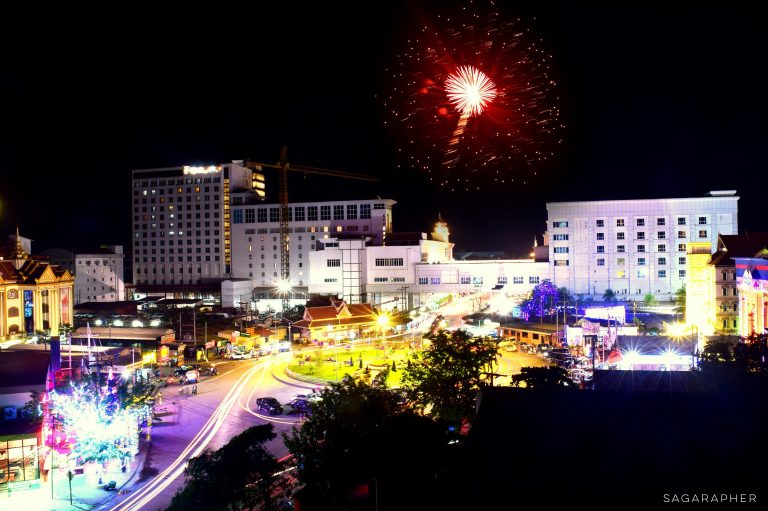
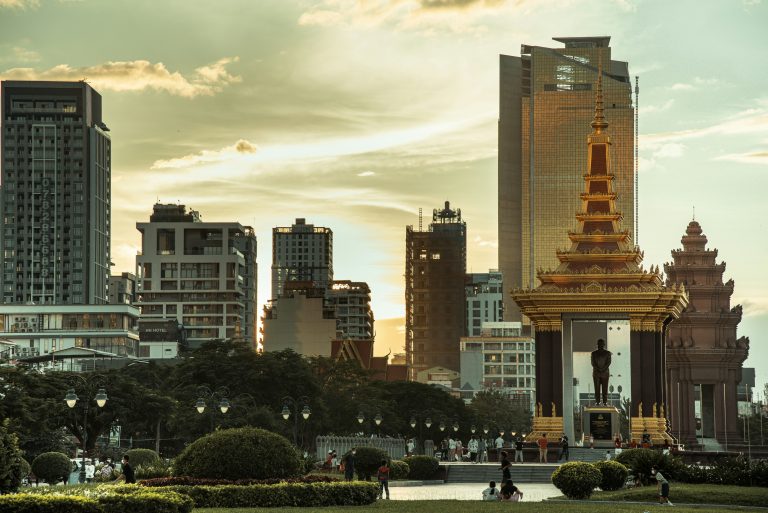
Phnom Penh is the political, cultural, and economic center of Cambodia, serving as the heart of national administration and urban life. Visitors entering the Phnom Penh mailing address district encounter bustling markets, historic temples, government buildings, and vibrant streets that reflect the city’s rapid growth.
The capital carries visible influences from the Khmer Rouge era, blended with French colonial architecture and expanding modern development. Today, Phnom Penh hosts the Office of the Prime Minister, key ministries and government agencies, and numerous foreign embassies, making it the central hub for Cambodia’s diplomatic and administrative activity.
The city also frequently serves as the political center where the prime minister and other senior officials conduct national decision-making and government planning.
Country Profile Summary
This country information overview examines the country’s geography, history, society, economy, governance, and cultural heritage. From the grandeur of Angkor to the struggles of the Khmer Rouge regime, Cambodia is a nation defined by resilience and an evolving national identity.
Cambodia hopes to continue developing its economy, strengthening the rule of law, and expanding its tourism and infrastructure sectors. The country remains a vital part of Southeast Asia, blending ancient traditions with modern aspirations.