
How to Learn Japanese
Learning Japanese opens a door into a fascinating culture, but it also requires patience, consistent practice, and a solid understanding of the Japanese language system.
Many people worry that learning Japanese is difficult, but with the right approach, good resources, and clear grammar explanations, anyone can make steady progress in learning the language.
Whether you want to study Japanese for travel, anime, work, or long-term living in Japan, your language learning journey can be both exciting and achievable.
Why Study Japanese?
Most people start to learn Japanese because they want to explore Japanese culture, understand anime, visit Japan, or communicate with Japanese people in their language. Learning the Japanese language also helps you connect with locals, appreciate traditions, and enjoy daily life in Japan more deeply.
If you plan to live, study, or work in the country, being able to converse in Japanese makes almost everything easier—from shopping to making friends.
Learning kanji also gives you insight into Chinese writing, since both systems share historical and linguistic connections.
Is the Japanese Language Hard to Learn?
The language has different writing systems, grammar structures, and politeness levels, so yes, it takes hard work to learn Japanese. Many people say kanji is the most challenging part, but consistent practice helps.
But that doesn’t mean it’s impossible. With practice, many language learners reach an intermediate level within a year or two. Consistent study, practical speaking, and regular review will lead to real progress, even if it feels slow in the beginning.
Over time, your knowledge of the Japanese language will develop naturally as long as you continue reading, listening, and practicing every day.
How Much Time Does It Take to Learn Japanese?
How much time it takes to learn Japanese depends on the learner, but most people need months of practice to reach beginner language fluency and years of consistent study to reach upper levels. Japanese grammar and kanji require practice, repetition, and patience.
How to Learn Japanese by Yourself

The most important thing to have when learning Japanese is motivation. You don’t need a school or expensive tutor to begin, but you do need a good starting point. Small daily study routines create steady progress, even if you only learn a few new words each day. Even simple reading helps build confidence and strengthen vocabulary memory.
Start with these steps to learn Japanese:
- Learn hiragana
- Learn katakana
- Learn grammar
- Learn vocabulary
- Practice reading
- Practice real-life conversations
- Learn kanji slowly
- Focus on listening
- Try to learn some writing
You can also learn Japanese through online courses, apps, textbooks, or a helpful tutor if you want more guidance. Many learners begin with a beginner Japanese class to build confidence before studying alone.
Include regular listening practice early, even before you understand everything, because your ears adapt quickly to natural speech. Building daily vocabulary habits early helps everything else feel less overwhelming.
As your knowledge grows, you will start recognizing patterns in vocabulary and sentence structure that felt confusing at first. Daily practice helps you create a strong study habit and stay consistent even when the language feels challenging.
A Complete Overview of the Japanese Language
Language Learning Basics: Hiragana and Katakana
Japanese uses four writing systems, but the most important thing for beginners is to learn katakana and hiragana. These are the building blocks of Japanese reading and pronunciation. Learning these scripts makes reading beginner materials much easier.
Hiragana and katakana have 46 characters each. Hiragana is used for grammar endings and function words, while katakana is used for foreign loanwords. Learning these alphabets helps increase speed, pronunciation, and understanding of new words.
Most beginner textbooks introduce hiragana before any other script because it appears in almost every sentence. Reading simple stories written mostly in hiragana helps build confidence before moving into kanji-heavy texts. Once hiragana becomes automatic, reading simple texts becomes less intimidating.
On the other hand, many foreign loanwords in Japanese are written in katakana, so recognizing katakana improves reading menus, signs, and product labels.
Once you can read hiragana and katakana, simple vocabulary becomes much easier to recognize in real Japanese text. With daily practice, hiragana becomes second nature and supports all later reading and kanji learning.
After mastering these, many language learners begin to learn kanji gradually, since kanji carries meaning and appears in everyday reading.
Japanese Grammar: Understanding the Structure
To converse in Japanese well, you need to learn grammar. Unlike English, Japanese sentences are structured differently and rely on particles, verb endings, and sentence markers. Most particles don’t use kanji, but verbs, nouns, and adjectives rely on kanji to carry meaning.
You’ll also learn Japanese verbs, conjugations, and basic grammar rules early on. Understanding kanji meanings helps grammar explanations make more sense because most verbs and nouns contain kanji.
Learning Japanese grammar slowly and clearly—with English explanations—will make it all make sense. Many beginners prefer textbooks and online lessons that include English explanations because they make complex points much easier to understand.
A beginner class can also be taken, which teaches the most common verbs and patterns used in daily conversation. A grammar-focused class helps you understand how particles connect ideas and build correct sentences.
Learning basic vocabulary helps you apply grammar rules like particles in natural phrases. Understanding how particles connect ideas helps learning Japanese feel more logical and makes sense even if the sentence order is different from English. This will also help boost your reading confidence.
Intermediate Level Learning: Vocabulary, Verbs, and Kanji
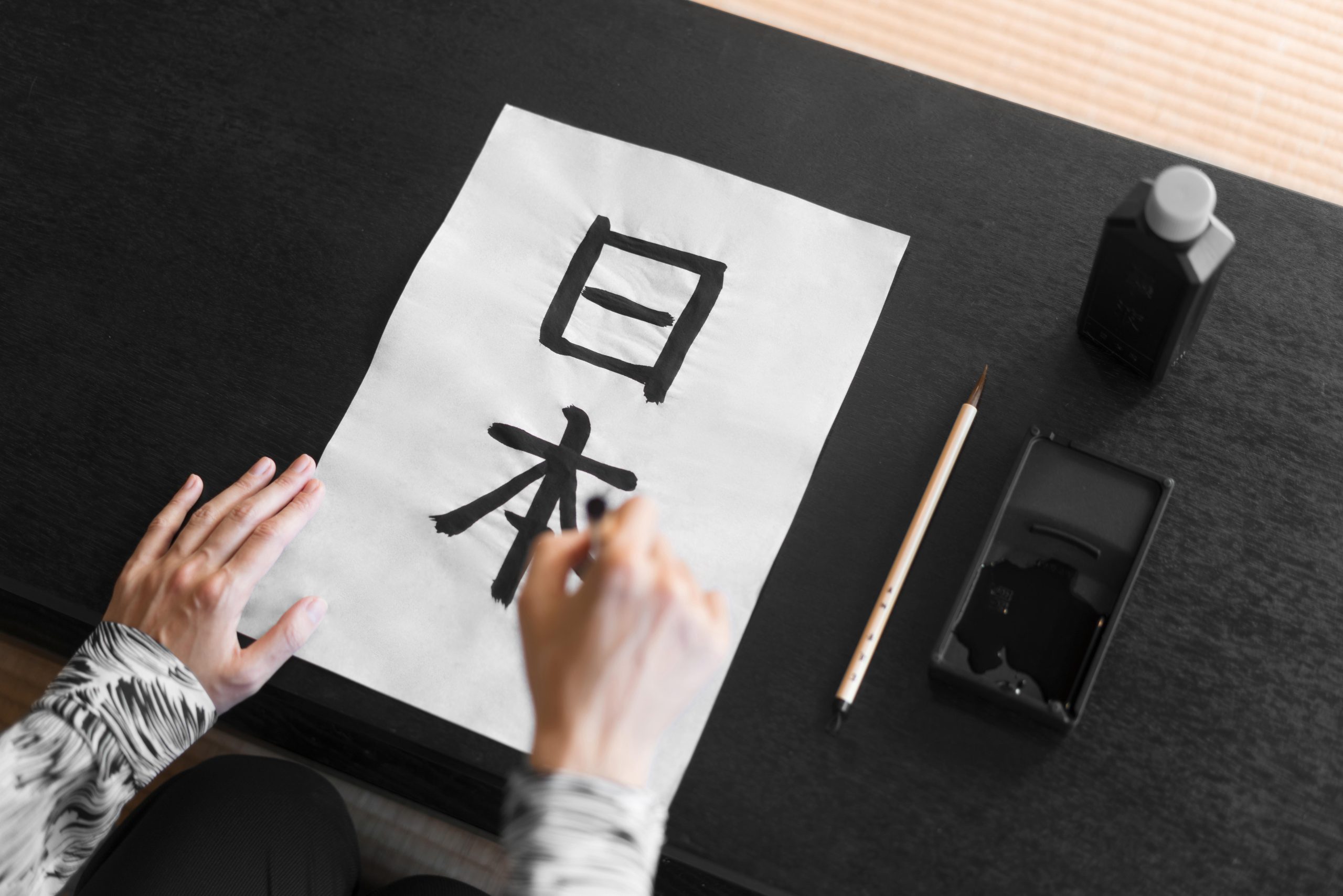
Once you understand the basics, start learning Japanese vocabulary, Japanese verbs, and kanji. Kanji represent meaning, so learning kanji helps you understand more words. Learning kanji also includes knowing stroke order, pronunciation, and common readings.
Kanji originated from Chinese characters, but Japanese kanji have different readings. Some kanji still keep pronunciation systems influenced by Chinese, which is why certain readings may sound different from native Japanese words. Many Japanese words share roots with Chinese characters, so recognizing familiar shapes can sometimes help beginners understand meanings.
When you study vocabulary, you’ll understand how Japanese verbs and grammar patterns appear in real sentences. Learning basic verbs and kanji allows you to create simple sentences and communicate basic ideas right away.
As you study vocabulary, pay attention to kanji characters because most everyday words contain kanji roots. It helps to review their hiragana readings alongside kanji and English meanings. Practice reading example sentences to see how grammar and kanji appear naturally.
Many use repetition apps because they help them memorize new words and characters more efficiently. Using SRS tools daily helps keep new vocabulary active in long-term memory and is extremely useful for getting familiar with kanji readings.
The apps also work well for memorizing hiragana characters until recognition feels automatic. Combining SRS with daily reading reinforces kanji recognition and vocabulary retention. But even when using SRS, taking a few minutes to write characters by hand helps your brain remember shapes and meanings more effectively.
Several SRS apps offer free versions, which are excellent for memorizing kanji and vocabulary without extra cost. As you study, you’ll notice that learning new words helps you understand everyday conversations more quickly, reinforcing your progress in learning the language.
Combine reading practice with listening exercises so you hear how grammar and vocabulary sound in real conversation. Many learners pair flashcards with audio or listening apps to reinforce pronunciation and real-life usage. Reviewing vocabulary regularly helps you notice your progress month by month. Over time, this routine will create long-term memory of vocabulary and kanji without feeling overwhelming.
Easy Japanese: Simple Ways to Start

To learn Japanese, start with basic words, phrases, simple language textbooks, and beginner-friendly content. Apps, subtitles, and children’s books are great examples of easy Japanese learning, introducing words, vocabulary, and kanji forms that help build a strong foundation. Some beginners join a Japanese class that explains basic grammar with simple texts.
How Do You Say Numbers in Japanese? (1–10)
1 – ichi
2 – ni
3 – san
4 – yon
5 – go
6 – roku
7 – nana
8 – hachi
9 – kyuu
10 – juu
Most Common Japanese Phrases
Introductory Phrases
When you start to speak Japanese, these basic phrases help you introduce yourself and learn more about the person you’re talking to:
Namae wa nan desu ka? – What is your name?
Watashi no namae wa _____ desu. – My name is _____.
Doko kara kimashita ka? – Where are you from?
Watashi wa _____ kara kimashita. – I am from _____.
Sou desu ka? – Really? / I see.
Politeness Expressions
Japanese people are famously polite, so learning common politeness expressions is useful in everyday conversations and helps you sound more natural when conversing in the language. Learning these sentences with kanji helps memorization faster than romaji:
Arigatou gozaimasu – Thank you
Douitashimashite – You’re welcome
Sumimasen – Excuse me / I’m sorry
Gomen nasai – I’m very sorry
Yoroshiku onegaishimasu – Nice to meet you / Please treat me well
Itadakimasu – Let’s eat
Gochisousama deshita – Thank you for the meal
Clarification Phrases
If you don’t understand something, these phrases help you ask for clarification or repeat information. Most everyday signs in Japan include kanji, so recognizing simple kanji helps in daily life:
Eigo de iu to? – How do you say that in English?
Wakarimasen – I don’t understand
Shirimasen – I don’t know
Wasuremashita – I forgot
Motto yukkuri kudasai – Please talk more slowly
Mou ichido kudasai – One more time, please
Nihongo wa mada perapera janai desu – I’m not fluent in Japanese yet
_____ tte iu no wa nan desu ka? – What does _____ mean?
Tetsudatte kuremasen ka? – Can you help me?
Everyday Questions
For everyday questions, these short expressions are extremely useful. You can use this when eating out, as restaurant menus usually display food names in kanji, especially traditional dishes. These can also be helpful when navigating Japan. Many place names use rare kanji, so reading maps becomes easier after basic kanji study:
Doko desu ka? – Where is it?
Itsu desu ka? – When is it?
Doushite? – Why?
Dochira desu ka? – Which one?
Nan desu ka? – What is it?
Dare desu ka? – Who is it?
Time Expressions
When conversations go beyond introductions, time words become very useful for planning, meeting friends, or understanding schedules. Days of the week are written in kanji, so learning these kanji first is helpful. These everyday time words and expressions help you follow what’s happening and answer simple questions about when things occur:
Ima nanji desu ka? – What time is it?
Ima – Now
Ato de – Later
Kyou – Today
Kinou – Yesterday
Ashita – Tomorrow
Mainichi – Every day
Everyday Vocabulary
As you start speaking more Japanese, simple daily words become essential for asking basic questions, describing routine activities, and understanding common situations in language conversation. Practice these:
Nansai desu ka? – How old are you?
Doko ni sundeimasu ka? – Where do you live?
Kyoudai ga imasu ka? – Do you have siblings?
Ikura desu ka? – How much does it cost?
Kore wa nan desu ka? – What is this?
Sore wa nan desu ka? – What is that?
Toire wa doko desu ka? – Where is the restroom?
Response Words
Finally, here are some very common response words that are used all the time in Japanese conversation:
Hai – Yes
Iie – No
Mada mada – Not yet
Kamoshiremasen – Maybe / I’m not sure
Tokidoki – Sometimes
Zenzen – Never
Itsumo – Always
Taitei – Usually
Watashi wa _____ desu – I am a _____ (job or role)
Daijoubu desu – It’s okay
Ii desu – That’s good
Other Resources for Learning Japanese: Spaced Repetition, Textbooks, Online Apps, and More
There are many language resources you can use to study Japanese pronunciation and vocabulary:
- Genki textbooks (highly recommended)
- Online Japan language apps
- Spaced repetition tools
- Free YouTube grammar videos
- Japan language podcasts
- Tutor lessons and school textbook resources
- Free language websites
- Posts from language blogs and courses
- Anime and Japan dramas
- Fun Japanese games
- Japanese class online
Genki textbook resources teach kanji, vocabulary, grammar, and useful conversation. These textbooks organize vocabulary by topic, making it practical for everyday situations. Genki introduces kanji gradually, using stroke order and example sentences. It also includes clear hiragana charts and gradual reading practice for beginners.
Along with textbooks and apps, learners can explore other methods and resources, such as conversation exchange partners and language and vocabulary immersion content. Most of these websites are free to use, allowing you to learn words, katakana, hiragana, etc., without cost. Some websites provide reading exercises with English explanations and kana support.
Many learners also enroll in a language school or course when they want classroom structure, speaking practice, and teacher feedback. Many language schools offer a fun beginner class based on Genki chapters, vocabulary, and kanji lessons.
Otherwise, you can read children’s books to start. Children’s books use slow, clear reading and often use hiragana with furigana, making them perfect for beginning readers. Daily reading is one of the fastest ways to increase reading speed and comprehension.
Don’t forget to try to write a little Japanese every day—journals, short messages, or vocabulary lists—to build confidence and long-term knowledge and fluency.
Japanese People and Culture: Why Language Matters

The most important thing when learning Japanese is cultural curiosity, because the Japanese language is closely connected to social values, politeness levels, and everyday communication.
Japanese people generally appreciate when learners try to study Japanese—even a few basic phrases—because it shows respect for their culture and effort in understanding how things work in Japan.
Knowing even simple Japanese makes daily life easier, whether you’re buying food, asking for directions, or greeting neighbors. It also helps you notice cultural details and other aspects of daily behavior, such as seasonal phrases, honorifics, polite expressions, and different ways of addressing people. These small things play a big role in building trust and good relationships.
By practicing consistently, asking questions, and not being afraid to make mistakes, you’ll gain confidence and learn cultural patterns that are difficult to understand through translation alone. Over time, you’ll see how language, manners, and culture are deeply connected—and you’ll enjoy a much more meaningful experience living in, visiting, or simply exploring Japan.
Frequently Asked Questions
What’s next after learning basic Japanese?
After learning basic Japanese and some kanji, most people want to reach an intermediate speaking or reading level. This means increasing vocabulary, reading Japanese news, practicing listening, and reviewing grammar. At the intermediate level, students usually begin to learn how to read full sentences with more complex kanji structures.
A tutor, course, or class can help teach you more advanced aspects and provide you with textbooks for more intuitive learning. With a structured class, you get regular speaking and reading practice, as well as teacher feedback. Joining a class can also correct common mistakes, help answer questions, and push you toward natural expression.
Taking classes at a language school, downloading intensive learning apps, reading textbooks, and joining conversation groups can push learners beyond beginner patterns and prepare them for more advanced listening, speaking, reading, and communication.
Watching and listening to Japanese news and podcasts is also useful for real-life vocabulary and pronunciation that you won’t always find in textbooks. Even at this level, reviewing hiragana helps reinforce spelling patterns and reading speed. With consistent practice, your vocabulary grows naturally every week as long as you keep reading, listening, and speaking the language.
Is Duolingo good for learning Japan’s language?
Duolingo Japanese is a good starting point to learn hiragana and vocabulary. But is Duolingo teaching enough to learn Japanese? Not usually.
You’ll need to learn deeper grammar explanations, Japanese verbs, kanji, and practice reading real sentences and speaking everyday vocabulary and pronunciation. Duolingo teaches some kanji, but you’ll need additional study to learn and master everyday kanji.
A structured class can better help fill knowledge gaps and improve pronunciation. Combine self textbook study with a regular Japanese class to stay motivated, improve faster, and speak with confidence.
What does 555 mean in Japanese?
In Japanese online slang, 555 can sound like laughing (gogo-go), similar to “hahaha.” It is a fun slang common in website chats, social media posts, and playful texting.
What are N1, N2, N3, N4, N5 in Japanese?
These are the official JLPT levels (Japanese Language Proficiency Test):
- N5 beginner
- N4 basic
- N3 lower intermediate
- N2 upper intermediate
- N1 advanced
N5 teaches basic kanji, while N2 and N1 require learning thousands of kanji.